


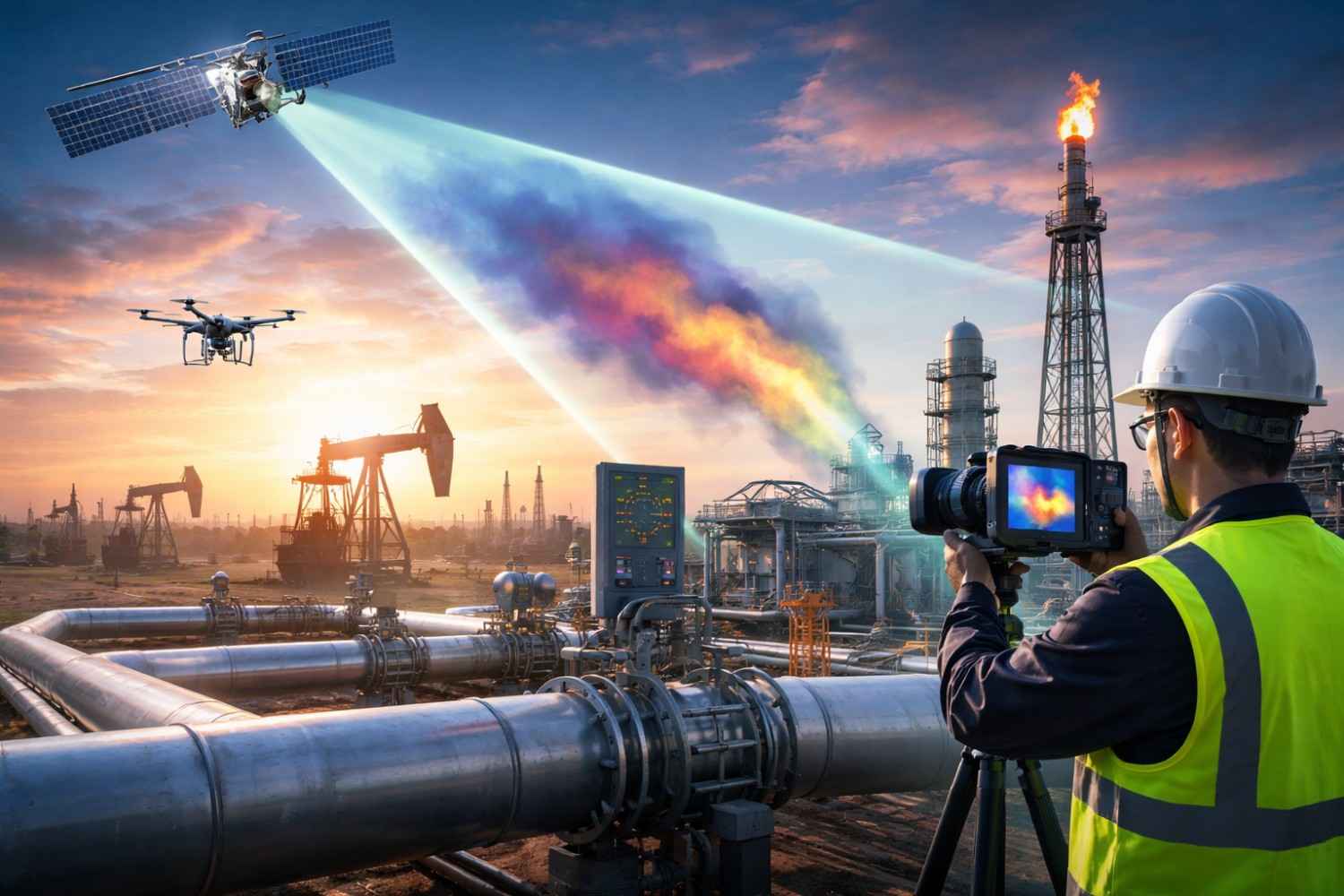
Carbon dioxide often hogs the spotlight in conversations about climate change. However, there is another, more potent greenhouse gas that demands immediate attention: methane. While it doesn’t linger in the atmosphere as long as CO2, methane is far more effective at trapping heat. In its first two decades after release, it creates over 80 times the warming power of carbon dioxide.
Why the Oil and Gas Sector is the Primary Target
Agriculture and waste management certainly contribute to the global methane tally, but the energy sector offers the most immediate path to reduction. The International Energy Agency (IEA) estimates that the oil and gas industry accounted for nearly 80 million tons of methane emissions in 2022 alone.
The sector is a primary focus because the infrastructure to capture and use this gas often already exists. In agriculture, methane is diffuse—coming from livestock across millions of acres. In oil and gas, the emissions come from specific, identifiable points: leaky valves, unlit flares, and pneumatic controllers.
Fugitive emissions—unintentional leaks from equipment—are widespread. Venting, the intentional release of gas for safety or operational reasons, adds to the burden. Because natural gas is primarily methane, preventing these escapes has a dual benefit: it keeps a potent greenhouse gas out of the atmosphere and keeps a saleable product in the pipeline.
High-Tech Solutions: Eyes on the Problem
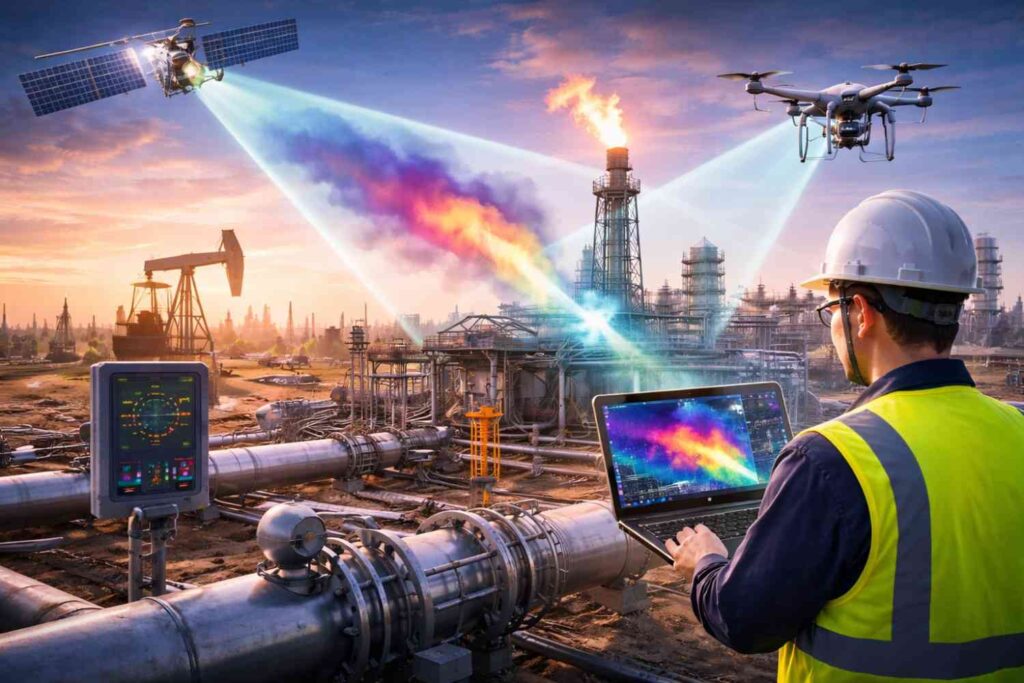
You cannot fix what you cannot see. Methane is colorless and odorless, making detection difficult without the right tools. Historically, operators relied on infrequent manual inspections, which often missed intermittent leaks. Today, a suite of advanced technologies is changing the game.
Leak Detection and Repair (LDAR)
Modern Leak Detection and Repair (LDAR) programs have moved beyond simple checklists. Operators now deploy optical gas imaging (OGI) cameras that visualize gas plumes invisible to the naked eye. These cameras allow technicians to scan large areas of piping and equipment to pinpoint the source of a leak.
Advanced sensors are also being deployed continuously at well pads and processing facilities. These “always-on” monitors can detect spikes in methane concentration and alert operators in real-time, drastically reducing the time a leak goes unnoticed.
Satellite Monitoring
For a broader view, the industry is looking up. Satellites equipped with high-resolution spectrometers can now identify large methane plumes from space. This technology is particularly effective for spotting “super-emitters”—massive, often accidental releases that account for a disproportionate amount of total emissions. Satellite data provides a transparency layer that helps operators identify problems in remote locations where manual inspections are costly and rare.
Operational Overhauls: Fixing the Equipment
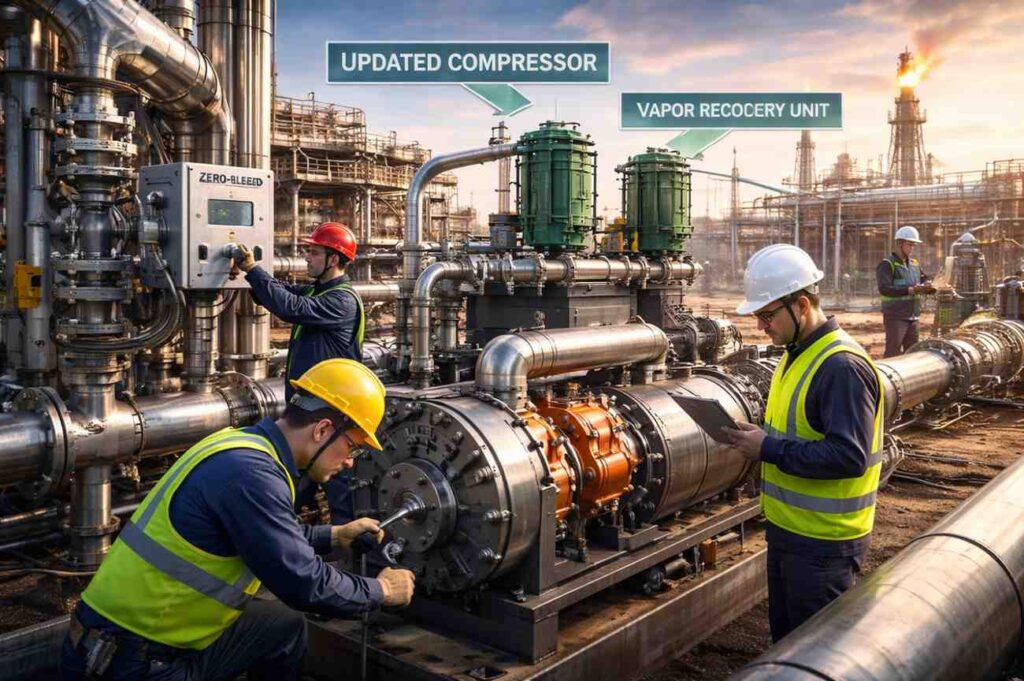
Technology detects the problem, but operational changes solve it. Much of the industry’s methane footprint comes from outdated equipment design rather than broken parts. Retrofitting facilities with modern hardware is a critical step.
Replacing Pneumatic Controllers
Pneumatic controllers are used widely to open and close valves and control liquid levels. Historically, these devices were powered by pressurized natural gas, which they would release (bleed) into the atmosphere as part of their normal operation.
The industry is rapidly shifting away from these high-bleed devices. Operators are replacing them with “low-bleed” or “zero-bleed” alternatives. Even better, many are converting to instrument air systems or electric controllers powered by solar panels, which eliminate methane venting from these devices entirely.
The Role of the Compressor
Pressure is the heartbeat of the natural gas supply chain. The compressor in the oil and gas industry infrastructure is essential for moving product from the wellhead to the processing plant and eventually to the consumer. However, compressors are also notorious for fugitive emissions. The seals that keep the gas contained can degrade over time, allowing significant amounts of methane to escape.
Best practices now dictate rigorous maintenance schedules for compressor rod packing and wet seals. Additionally, operators are installing vapor recovery units (VRUs) on compressors to capture gas that would otherwise be vented during maintenance or shutdown periods.
Eliminating Routine Flaring
Flaring is the burning of natural gas associated with oil extraction when there is no pipeline infrastructure to transport it. While burning methane converts it to less-potent CO2, flares are rarely 100% efficient. Unlit or inefficient flares vent raw methane directly into the sky.
Leading companies are committing to zero routine flaring policies. This involves building the necessary pipeline infrastructure before oil production begins or using on-site technologies to convert the gas into electricity for local operations.
The Economic Case for Capture

Environmental stewardship is the primary driver for methane mitigation, but the economics are increasingly persuasive. Methane is, after all, natural gas. Every cubic foot that doesn’t leak into the atmosphere is a cubic foot that can be sold.
The IEA suggests that around 40% of methane emissions from oil and gas operations could be avoided at no net cost. The value of the captured gas often covers the expense of the retrofits and repairs within a few years.
Furthermore, the market is beginning to differentiate between “clean” gas and gas with a high methane intensity. Buyers, particularly in Europe and Asia, are looking for certified low-methane natural gas. Producers who can prove their operations are tight and monitored will likely command a premium or secure preferred supplier status in a decarbonizing world.
Regulatory pressure is also reshaping the financial landscape. Governments in the US, Canada, and the EU are implementing strict methane fees and regulations. Operators who fail to address their emissions face significant financial penalties, turning mitigation from a voluntary good deed into a compliance necessity.
Conclusion
For the oil and gas industry, this is an opportunity to demonstrate viability in a transition economy. By adopting rigorous LDAR programs, upgrading operational hardware like compressors and pneumatic controllers, and responding to economic incentives, the sector can drastically reduce its footprint.